Daridorexant is a dual orexin receptor antagonist (DORA) which blocks the binding of the wake-promoting orexin neuropeptides. Rather than inducing sleep through broad inhibition of brain activity, daridorexant selectively blocks the activation of orexin receptors. Consequently, daridorexant decreases the wake drive, allowing sleep to occur, without altering the proportion of sleep stages.
Daridorexant for pediatric insomnia
Daridorexant is a dual orexin receptor antagonist
Pediatric insomnia is characterized by difficulty initiating or maintaining sleep that is perceived as a problem by the child or caregiver due to its severity, chronicity, frequency, and the significant daytime impairment it causes for the child or the family. Pediatric insomnia disorder is common, with prevalence estimated at approximately 8% in children and 12% in adolescents, and may persist over time. It is associated with impaired daytime functioning, learning and memory, academic performance, emotional regulation, and quality of life.
The burden is particularly high among children with neurodevelopmental disorders. Insomnia symptoms have been reported in approximately 50–80% of children with autism spectrum disorder and 25–75% of children with attention-deficit/hyperactivity disorder. Persistent insomnia may worsen the core symptoms and associated conditions of these disorders, extending its impact across the full 24-hour period.

The goal of treatments for insomnia is to improve sleep quality and quantity, as well as daytime functioning, while avoiding next-morning residual effects. Current recommended treatment of insomnia includes sleep hygiene recommendations, cognitive behavioral therapy, and pharmacotherapy.
Pharmacological treatment options for pediatric insomnia are very limited, with no approved medication in the US and only prolonged-release melatonin approved for certain pediatric populations in Europe.

Wake and sleep signaling is regulated by intricate neural circuitry in the brain. One key component of this process is the orexin system, which helps promote wakefulness.
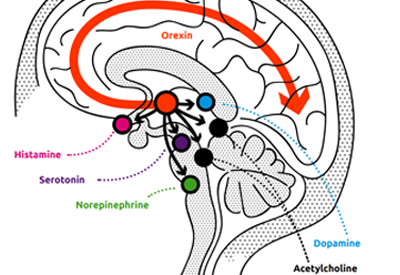
Orexin neuropeptides (small protein-like molecules used by nerve cells to communicate with each other in the brain) promote wakefulness through the orexin receptors OX1R and OX2R. Together, these neuropeptides and receptors make up the orexin system. The orexin system stimulates targeted neurons in the wake system, leading to the release of several chemicals (dopamine, serotonin, histamine, acetylcholine, norepinephrine) which promote wakefulness. Under normal circumstances, orexin levels rise throughout the day as wakefulness is promoted and then fall at night. Research suggests that, in chronic insomnia disorder, wake-promoting regions of the brain remain overactive at night (hyperarousal). Orexin therefore provides a specific target for pharmacotherapeutic intervention.
Dual orexin receptor antagonists (DORAs) offer an entirely different approach to treating insomnia than previous drug classes: by selectively blocking the activity of orexin, they turn down overactive wakefulness, in contrast to insomnia treatments which act via general CNS sedation. Blocking orexin receptors reduces the downstream activity of the wake-promoting neurotransmitters that are overactive in insomnia. As a result, orexin receptor antagonism targets the fundamental mechanism of insomnia.
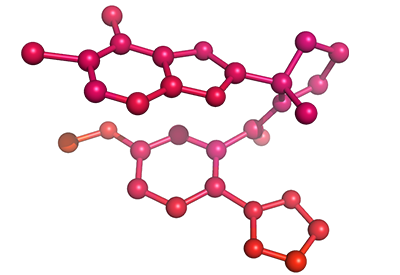
Idorsia’s expert R&D team designed daridorexant with an optimal pharmacokinetic intended to provide efficacy throughout the night while minimizing residual exposure the following morning. In adults, it is rapidly absorbed, has a terminal half-life of approximately eight hours, and has no active metabolites or accumulation following repeated administration. In its pivotal adult program, daridorexant improved sleep onset, sleep maintenance, self-reported total sleep time, and insomnia-related daytime functioning.
Daridorexant for pediatric use remains investigational and is not approved in any country.
Current status
In March 2026, Idorsia announced positive top-line results from its Phase 2 dose-finding study evaluating 10, 25, and 50 mg doses of daridorexant in pediatric patients aged 10 to < 18 years with insomnia disorder. The results were subsequently presented at Sleep Europe 2026 in October.
The primary objective of the Phase 2 study (NCT05423717) was to characterize the dose-response relationship of daridorexant on objective total sleep time (TST), using polysomnography (PSG). Patients were randomized in a 1:1:1:1 ratio to 10, 25, or 50 mg daridorexant, or placebo for a treatment period of 2 weeks, with 165 patients receiving study medication. The study enrolled children with insomnia disorder aged 10-11 years (21%) and 12-17 years (79%), including those with a history of neurodevelopmental disorders, such as Autism Spectrum Disorder (ASD) and Attention-Deficit/Hyperactivity Disorder (ADHD).
The study met its primary endpoint, demonstrating a statistically significant dose-response in objectively measured total sleep time after the first dose (p=0.0185). A single dose of daridorexant 50 mg increased objective total sleep time by 50 minutes from baseline, compared with 20 minutes with placebo (least-square mean).
In participants with neurodevelopmental disorders, daridorexant 50 mg increased objective total sleep time by 64 minutes from baseline, compared with 27 minutes with placebo (least-square mean).
After two weeks, in the overall population, caregiver-reported total sleep time increased from baseline by approximately 69 minutes with daridorexant 50 mg, compared with approximately 30 minutes with placebo (least-square mean).
Daridorexant 50 mg also provided the highest and most consistent improvements across measures of sleep initiation, sleep maintenance, and sleep quality while numerically reducing morning sleepiness.
Importantly, the study confirmed the excellent safety and tolerability profile of daridorexant for the first time in pediatric patients as young as ten. Daridorexant was well tolerated across all doses studied. At 50 mg, the highest recommended adult dose, the incidence of adverse events was similar to placebo, and the safety profile was consistent with the known adult safety profile. No adverse events suggestive of abuse potential or physical dependence and no withdrawal symptoms were observed.
The study forms part of an FDA-approved Pediatric Study Plan and an EU PDCO-approved Paediatric Investigation Plan. Idorsia will now engage with health authorities to discuss next steps in pediatric insomnia.
Daridorexant for pediatric use remains investigational and is not approved in any country.

Milestones
2026 Positive Phase 2 study in children with insomnia disorder
2018 Initiation of Phase 3 registration program
2017 Completion of Phase 2 clinical program
2015 Initiation of Phase 1 clinical program
Key scientific literature
• Dauvilliers Y et al. Sleep Medicine. 2025 doi:10.1016/j.sleep.2025.106523.
• Lederer K et al. Journal of Sleep Research. 2025. doi: 10.1111/jsr.70002.
• Fietze I., et al. 2022 Oct;39(10):795-810.
• Kunz, D. et al. CNS Drugs (2022).
• Mignot E, et al. Lancet Neurol. 2022; 21: 125–39.
• Dauvilliers, Y., et al. (2020). Ann Neurol 87(3): 347-356.
• Zammit, G., et al. (2020). Neurology 94(21): 1-11.
• Muehlan, C., et al. (2020). J Clin Psychopharmacol 40(2): 157-166.
• Muehlan, C., et al. (2020). J Psychopharmacol 34(3): 326-335.
• Boof, M. L., et al. (2019). Eur J Clin Pharmacol 75(2): 195-205.
• Muehlan, C., et al. (2019). Curr Drug Metab 20(4): 254-265.
• Muehlan, C., et al. (2019). Eur Neuropsychopharmacol 29(7): 847-857.
• Muehlan, C., et al. (2018). Clin Pharmacol Ther 104(5): 1022-1029.
• Treiber, A., et al. (2017). J Pharmacol Exp Ther 362(3): 489-503.
• Brisbare-Roch, C., et al. (2007). Nat Med 13(2): 150-5.